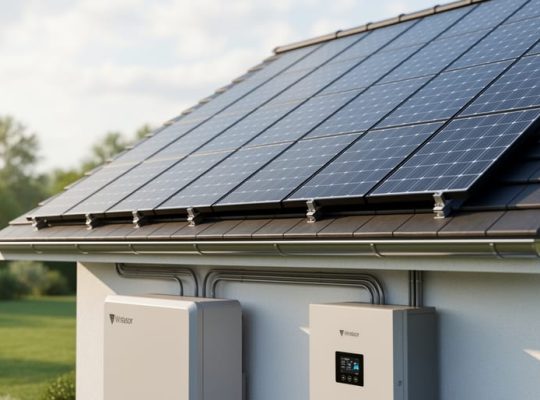
Setting the right reserve price for solar panels at auction typically ranges from 40% to 70% of retail value, depending on panel condition, age, efficiency ratings, and current market demand. Used solar panels in excellent condition with warranties intact command reserves closer to the upper end, while older systems or panels without certification documents settle toward the lower threshold.
Three factors drive these percentages: technology generation (monocrystalline panels from the past three years hold value better than older polycrystalline models), wattage output (higher-efficiency 400W+ panels attract premium bids), and manufacturer reputation (tier-one brands like LG, SunPower, and Panasonic consistently outperform lesser-known manufacturers by 15-25% at auction).
Reserve pricing mistakes cost sellers thousands. Set too high and your lot goes unsold, costing you listing fees and storage expenses. Price too conservatively and you leave money on the table, sometimes significant amounts when demand spikes. I’ve watched business owners with 50-panel commercial lots lose £3,000+ by misjudging buyer appetite or failing to account for recent efficiency improvements that made their inventory more desirable than expected.
The auction format adds complexity beyond standard resale. Unlike fixed-price listings, auctions create competitive bidding dynamics where understanding terminology like what does guide price mean becomes critical, the difference between attracting serious bidders and scaring them away entirely. Your reserve acts as a safety net, protecting you from fire-sale prices while still allowing market forces to determine fair value.
This guide provides calculation methods, current 2026 price benchmarks, and decision frameworks specifically for solar equipment auctions, whether you’re clearing installer inventory, upgrading residential systems, or liquidating commercial arrays.
What Is a Reserve Price in Solar Panel Auctions?
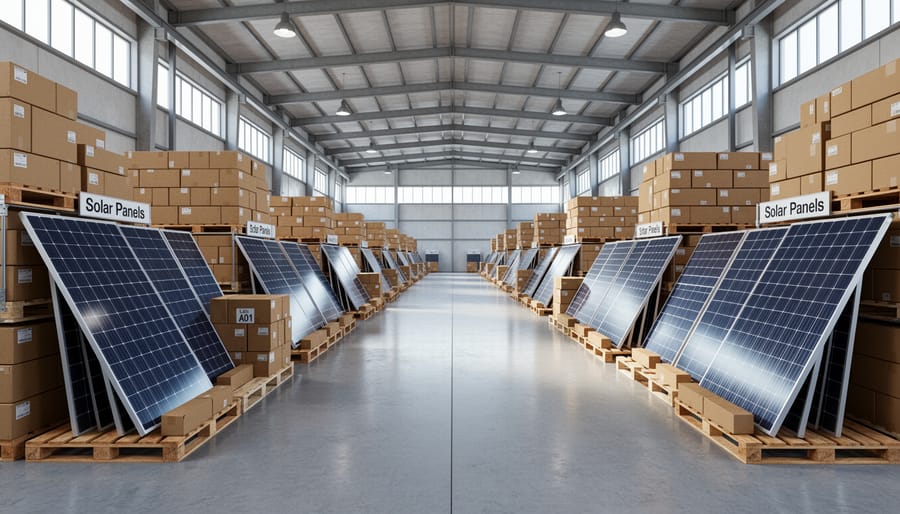
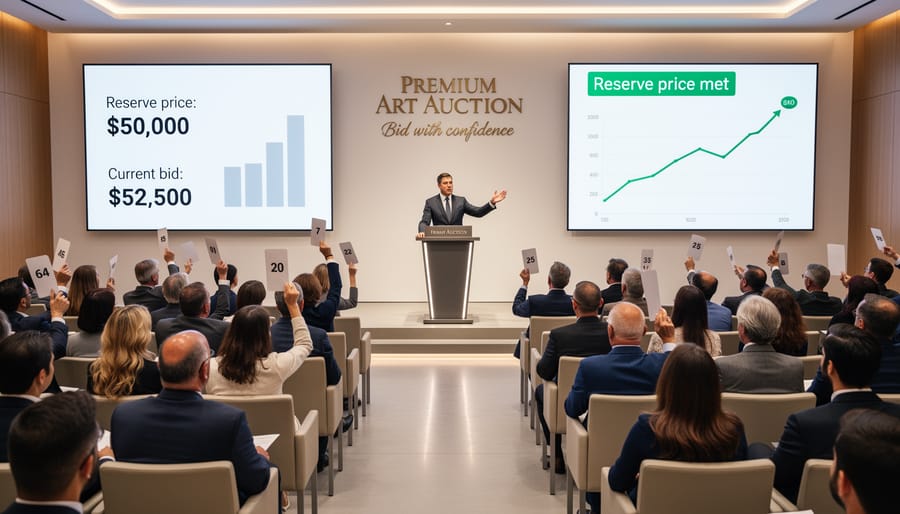
In solar panel auctions, the reserve price is the confidential minimum amount a seller will accept for their equipment. Unlike the guide price, which is publicly displayed to attract bidders and signal expected value, the reserve remains hidden until bidding concludes. If bids don’t reach this threshold, the seller isn’t obligated to complete the sale.
The guide price serves as market positioning. When you see a lot of 50 monocrystalline panels listed with a guide price of $8,000, that figure reflects the auctioneer’s estimate of fair market value based on comparable sales, condition assessments, and current demand. It sets bidder expectations and anchors the auction psychology.
Your reserve price, however, protects your bottom line. You might set it at $6,500 for that same lot, ensuring you don’t sell below your break-even point or acceptable profit margin. This gap between guide and reserve creates negotiation space and accommodates market fluctuations on auction day.
Solar equipment auctions rely on this dual mechanism because photovoltaic hardware presents unique valuation challenges. Panel efficiency degrades over time, technology advances rapidly, and regional incentive programs shift demand unpredictably. The guide price reflects optimistic market conditions, while the reserve accounts for worst-case scenarios.
For buyers, the guide price offers transparency and helps justify budget allocation. For sellers, the reserve prevents panic selling during slow auctions or when competing lots flood the market. This structure emerged from traditional art and real estate auctions but proves particularly valuable in renewable energy markets, where rapid technological change and policy shifts create pricing volatility that both parties need protection against.
Solar Panel Reserve Price Ranges by Type and Condition (2026)
Reserve prices for solar panels vary significantly based on panel technology, condition, and market positioning. Understanding these ranges helps sellers set competitive minimums that protect their interests while attracting serious bidders.
Residential monocrystalline panels command the highest reserve prices due to their superior efficiency and longevity. New 400-watt monocrystalline panels from Tier 1 manufacturers typically carry reserve prices between 60-75% of retail value, translating to roughly $120-$180 per panel depending on brand strength. Well-maintained used monocrystalline systems aged 2-5 years usually see reserves set at 40-55% of original retail, while refurbished units fetch 35-50% as buyers factor in warranty limitations and cosmetic wear.
Polycrystalline panels occupy the mid-market segment with correspondingly lower reserve expectations. New polycrystalline inventory generally supports reserves at 55-70% of retail pricing, reflecting the technology’s slightly reduced efficiency compared to monocrystalline alternatives. Used polycrystalline panels aged 3-7 years typically justify reserves around 30-45% of retail, particularly when documentation proves consistent output performance.
| Panel Type & Condition | Typical Wattage | Reserve Range (% of Retail) | Approximate Per-Panel Reserve |
|---|---|---|---|
| Monocrystalline (New) | 350-450W | 60-75% | $120-$180 |
| Monocrystalline (Used 2-5yr) | 300-400W | 40-55% | $70-$110 |
| Polycrystalline (New) | 300-380W | 55-70% | $90-$140 |
| Commercial-Grade (New) | 500-650W | 65-80% | $200-$320 |
| Refurbished (Any Type) | 250-400W | 35-50% | $60-$100 |
Commercial-grade panels designed for utility-scale installations represent the premium auction category. These high-wattage units (500-650W) from established manufacturers justify reserves at 65-80% of retail when new, as commercial buyers prioritize reliability and warranty coverage for large-scale deployments. The commercial market shows less price sensitivity to brand premium comparisons than residential auctions, with proven performance data often mattering more than name recognition.
Excess inventory and bulk lots require strategic reserve pricing. Sellers moving 50-plus panels often set per-unit reserves 10-15% below single-unit minimums to compensate buyers for logistics complexity and capital commitment. Age dramatically impacts reserve calculations, panels over eight years old rarely support reserves above 25% of original retail regardless of condition, as efficiency degradation concerns and advancing technology make newer options more attractive to bidders.
Complete Cost Breakdown: What Determines Your Reserve Price

Your reserve price isn’t arbitrary, it’s the sum of measurable factors that determine what your solar panels are worth today. Start with the original purchase price as your baseline, then systematically adjust for depreciation, market conditions, and equipment-specific attributes. Understanding each component helps you defend your reserve with data rather than guesswork.
Solar equipment depreciates faster than many sellers expect. Panels typically lose 15-20% of their value in the first year after purchase, then 8-12% annually for years two through five. After that, depreciation slows to roughly 5-7% per year as the equipment approaches mid-life. This rate isn’t arbitrary, it reflects both panel lifespan and degradation patterns and buyer perceptions about remaining productive years. A three-year-old panel system that cost $15,000 new might reasonably depreciate to $10,500-$11,250, assuming average wear and no damage.
Brand premium adds or subtracts 10-25% from reserve calculations. Tier-1 manufacturers like LG, Panasonic, and SunPower command higher resale values because buyers trust their quality and expect better after-sale support. Lesser-known brands, even with identical specifications, sell for 15-30% less at auction. This gap widens for older equipment where brand reputation determines perceived reliability.
Market demand fluctuates with incentive programs and installation cycles. When federal tax credits expand or states introduce new rebates, auction prices for compatible equipment rise 8-15% as installers compete for inventory. Conversely, technological leaps, like widespread availability of 500W+ panels, can depress resale values for older 300-350W models by 20% almost overnight, regardless of their condition.
Several technical factors influence your equipment’s worth:
- Efficiency degradation per year (0.5% is excellent; 0.8%+ hurts value)
- Warranty transferability (full transfer adds 10-15% to reserve)
- Certification status (UL, IEC listings are non-negotiable for most buyers)
- Mounting hardware inclusion (complete systems justify 12-18% higher reserves)
- Market saturation (oversupply of specific models drops prices 15-25%)
Transportation costs eat into final proceeds, so factor them into your reserve. Shipping panels 500+ miles can cost $0.15-$0.30 per watt, meaning a 10kW system might incur $1,500-$3,000 in logistics expenses. Local pickup auctions let you set reserves closer to true equipment value, while shipped lots require lower reserves to remain competitive after buyers calculate total landed cost.
Factors That Influence Solar Panel Auction Reserve Prices
Reserve prices don’t exist in a vacuum. Multiple forces push and pull on the value of solar panels at auction, and understanding these factors helps you set a reserve that’s neither unrealistically high nor unnecessarily low.
Seasonal demand creates predictable price swings in renewable energy auctions. Spring and early summer see heightened activity as contractors and homeowners prepare for installation season, driving reserve prices 15-20% higher than winter months when construction slows. Commercial buyers stockpiling inventory before year-end tax deadlines also elevate prices in Q4, while January and February typically represent the softest market. If your auction timing is flexible, these patterns should directly inform your reserve strategy.
Regional incentive programs dramatically affect what buyers will pay. States with generous solar funding and grants or strong net metering policies create more aggressive bidding because buyers can offset their acquisition costs through rebates and long-term energy credits. A 400W panel might justify a 30% higher reserve in California or Massachusetts compared to a state with minimal renewable incentives. Check your region’s current programs before finalizing your reserve floor.
Technological advancement cycles compress older panel values faster than simple age depreciation would suggest. When manufacturers release efficiency breakthroughs (400W panels replacing 350W as the standard, bifacial technology becoming mainstream), previous-generation equipment loses appeal rapidly. A 2021-era monocrystalline panel might fetch 70% of its original value in 2026, but if a major efficiency leap occurs, that drops to 55-60% almost immediately as buyers prioritize the latest technology.
Lot size fundamentally changes buyer behavior and acceptable pricing. Bulk lots of 50-100 panels attract wholesale buyers and installers who expect volume discounts of 18-25% below individual panel prices, requiring lower per-unit reserves. Individual panels or small lots (2-10 units) appeal to DIY homeowners and repair contractors willing to pay premiums for convenience, justifying reserves closer to retail. A commercial installer recently shared that his 80-panel lot sold at auction for $185 per panel when his reserve was $175, while comparable individual panels in the same auction cleared at $245-260.
Buyer audience profoundly impacts pricing dynamics. Auctions dominated by professional installers tend toward conservative, cost-focused bidding since panels are input costs, not final products. End-user homeowners researching grid-connected PV systems for personal installation often bid more emotionally and less strategically, pushing prices higher. Resellers calculating arbitrage margins fall somewhere between. Understanding which audience your chosen platform attracts helps calibrate realistic reserve expectations.
Platform reputation and reach directly correlate with realized prices. Established renewable energy auction sites with verified buyer networks consistently deliver 12-18% higher winning bids than general equipment platforms because specialized audiences understand product value better and trust the marketplace. Lower reserves may work on premium platforms where buyer competition is fierce, while generic auction sites require higher reserves as insurance against thin bidding.
Setting Your Own Reserve vs. Using Professional Auction Services

When you’re preparing solar panels for auction, one of your first decisions is whether to set the reserve price yourself or engage professional auction services. This choice significantly impacts both your immediate costs and final sale outcome.
Setting your own reserve requires dedicated research but keeps expenses minimal. You’ll need to master market analysis by tracking completed auction results on platforms like eBay, government surplus auctions, and renewable energy marketplaces. Comparable sales research involves identifying panels with matching specifications, age, and condition, then adjusting for differences in wattage, brand reputation, and market timing. Online depreciation calculators designed for solar equipment can help, though they often rely on generic formulas that miss nuances like regional demand or technological obsolescence. The process demands 10-15 hours of research for accurate pricing, plus ongoing monitoring of market shifts. Many sellers who have navigated DIY installation considerations find the research skills transfer well to auction pricing, as both require understanding equipment specifications and market value.
Professional auction houses and renewable energy brokers bring specialized expertise to the table. They maintain databases of solar equipment transactions, understand seasonal pricing patterns, and have established relationships with qualified buyers. Services typically charge 10-20 percent commission on final sale price, or flat fees ranging from $500-$2,000 depending on lot size and complexity. Beyond valuation, they handle photography, lot descriptions, marketing to targeted buyer lists, and strategic reserve recommendations based on current inventory levels across multiple markets. Their experience often results in 15-30 percent higher final prices compared to amateur listings, though fees erode some of that advantage.
Pros
- DIY approach eliminates commission fees and keeps all proceeds from the sale
- You maintain complete control over pricing strategy and auction timing decisions
- Professional services provide expert valuation based on comprehensive market data
- Auction houses attract serious, pre-qualified buyers through established networks
- Professionals handle all marketing, photography, and logistical coordination
Cons
- DIY requires significant time investment for research and comparable sales analysis
- Amateur sellers often misprice due to incomplete market knowledge or emotional attachment
- Professional fees consume 10-20 percent of sale proceeds, reducing net return
- You surrender pricing control to the auction house’s recommendations and strategies
- DIY listings may attract fewer qualified buyers without professional marketing reach
The right choice depends on your lot value and urgency. For individual residential panels or small lots under $3,000, the DIY route makes financial sense if you’re willing to invest the research time. For commercial inventory, bulk lots, or high-value equipment exceeding $5,000, professional services typically deliver better net outcomes despite their fees, particularly when you factor in the opportunity cost of your time.
How to Calculate the Right Reserve Price: Step-by-Step
Calculating your reserve price doesn’t require guesswork. Follow this systematic approach to arrive at a figure that protects your bottom line while keeping bidders engaged.
- Research current market value. Check recent completed sales on platforms like eBay, Solar Equipment Marketplace, and specialized renewable energy auction sites. Look for panels matching your exact specifications: brand, wattage, efficiency rating, and age. Record the final sale prices from at least five comparable transactions within the past 90 days.
- Apply condition-based adjustments. Deduct 15-20% if your panels show visible wear or minor scratches. New-in-box panels command full market value, while used panels with verified output testing typically fetch 70-85% of new retail. Factor in an additional 5-10% reduction if original packaging or documentation is missing.
- Account for urgency and holding costs. Calculate your monthly storage expenses, insurance, and opportunity cost of tied-up capital. If you need quick liquidation, reduce your target by 10-15%. Remember that every month you hold inventory costs money, so aggressive pricing often yields better net returns than waiting for perfect bids.
- Study comparable auction outcomes. Review the relationship between guide prices and final hammer prices in your category. Most successful solar panel auctions see winning bids land 5-15% above reserve when the guide price is set strategically. Note which listing formats, lot sizes, and auction timing generated the strongest bidding activity.
- Set your guide price strategically. Position it 10-20% above your intended reserve to create bidding room while signaling fair value. A guide of $180 per panel with a $150 reserve gives bidders confidence they’re getting value while protecting your minimum acceptable return.
- Choose absolute or discretionary reserve. An absolute reserve means no sale occurs below that figure. A discretionary reserve lets you review and potentially accept near-miss bids. For high-value commercial lots, discretionary reserves offer flexibility; for standard residential panels, absolute reserves simplify the process.
Document your calculations in a spreadsheet. This creates an audit trail for tax purposes and helps you refine your approach across multiple auctions. Most sellers find their reserve accuracy improves significantly by the third listing as they learn their specific market segment.
Test your calculated reserve against the worst-case scenario. If the auction closes at exactly your reserve price, would you feel satisfied with the outcome? If the answer is no, you’ve set it too low.
Common Reserve Price Mistakes and How to Avoid Them
Even experienced sellers stumble when setting solar panel auction reserves. The most damaging mistake is anchoring your reserve to original purchase price rather than current market value. A commercial installer in Nevada learned this lesson after three failed auctions: “I set my reserve at 60% of what I paid two years ago, but newer panels with better efficiency had dropped prices industry-wide. When I adjusted to 45% based on actual comparable sales, my inventory moved in one auction.”
Setting reserves too high creates a false sense of security while preventing legitimate sales. If your 400W monocrystalline panels don’t meet reserve at $85 per panel when market comps show $75-$95, you’ve wasted listing fees and missed buyers who won’t return. Conversely, panic-pricing reserves too low costs you money, setting $50 reserves on panels worth $90-$110 essentially hands away profit margin.
Timing errors compound pricing mistakes. Launching auctions in November-January, when solar installation activity slows in northern markets, means lower bidder turnout regardless of your reserve strategy. Similarly, flooding the market with 500 panels in one lot when buyer demand supports 100-panel purchases fragments your audience and undermines reserve achievement.
The guide price-reserve gap confuses many sellers. Setting a $100 guide with a $95 reserve leaves almost no bidding room and signals desperation. Effective gaps run 15-25%: a $100 guide pairs better with a $75-$85 reserve, creating competitive bidding space while protecting your floor.
Finally, failing to adjust reserves for lot size wastes opportunities. Per-panel reserves that work for 50-panel lots rarely succeed at the same rate for 500-panel bulk sales, where volume discounts are expected. Scale your expectations accordingly.
Frequently Asked Questions
Can you lower your reserve price during an auction?
Most auction houses allow sellers to lower reserves while bidding is active, though this must be communicated to the auctioneer immediately. However, you cannot raise a reserve once the auction begins, and some online platforms lock reserves at listing time with no mid-auction changes permitted.
What happens if bidding doesn’t reach my reserve price?
The item remains unsold and returns to you. Some auctioneers will then approach the highest bidder privately to negotiate a post-auction sale, though you’re under no obligation to accept below-reserve offers.
How do online and live auctions differ in reserve strategy?
Online auctions typically benefit from lower reserves since you reach more bidders and build momentum with early bids. Live auctions with in-person inspection often support higher reserves because buyers can verify panel condition firsthand before committing.
Should you disclose your reserve price to potential bidders?
Never disclose your actual reserve. Public reserves eliminate bidding psychology and often become the ceiling rather than the floor, reducing competitive tension that drives prices higher.
What percentage below retail is typical for auction reserves?
Solar panel auction reserves generally sit 40-60% below current retail prices for new equipment, depending on age and condition. Used panels in good condition might command 50-70% of their original price, while excess new inventory from discontinued lines typically fetches 60-75% of retail.
Can you set different reserves for panels sold as a lot versus individually?
Yes, and you should. Bulk lots warrant lower per-panel reserves since buyers take on larger upfront costs and logistics challenges, while individual panels can support reserves closer to retail proportions because they attract end-users willing to pay premium prices for specific quantities.
Understanding these reserve mechanics helps you navigate auction scenarios with confidence. The key is balancing protection against leaving opportunity on the table, a calculation that shifts based on your urgency, the equipment’s marketability, and current renewable energy demand in your region.
Setting the right reserve price for your solar panel auction isn’t just about picking a number, it’s about protecting your investment while staying competitive enough to attract serious bidders. Throughout this guide, we’ve shown you how guide prices signal market expectations and draw in buyers, while your reserve price acts as your safety net, ensuring you don’t sell below what your equipment is genuinely worth.
The most successful sellers understand this balance. They research comparable sales, factor in their panel’s condition and specifications, account for current market timing, and set reserves that reflect realistic minimums without scaring off bidders. Whether you’re liquidating excess inventory from a commercial installation or selling upgraded residential panels, applying the calculation frameworks and avoiding common mistakes we’ve outlined will put you in a stronger position.
Remember that solar equipment values shift with technology cycles, seasonal demand, and regional incentive programs. What worked as a reserve strategy six months ago may need adjustment today. Review current auction results regularly, stay informed about market trends, and don’t hesitate to consult with professionals when dealing with high-value lots.
At Sun Nature Power Solutions, we understand the complexities of valuing renewable energy equipment. Our resources can help you benchmark your solar assets and make informed decisions whether you’re buying or selling. With strategic reserve pricing, you’ll maximize your auction outcomes and ensure fair value for quality solar technology.