Utility plant boiler turbine operators are licensed, trained professionals who run the boilers that make steam and the turbines that turn that steam into the electricity flowing to your outlets. There’s no single national certificate for the job. Instead, certification is layered: a state or provincial license where one applies, employer-specific qualification on each plant’s own equipment, optional industry credentials, and a separate, stricter track for nuclear facilities.
That structure surprises many readers. Operators don’t earn one badge and call it done. They log supervised hours, pass written and practical exams, and keep proving competence as equipment and regulations change. The stakes explain why. A boiler holds enormous pressure and heat, and a turbine spins at thousands of revolutions per minute, so the people monitoring them are trained to spot trouble long before it becomes a hazard.
If you’re a student weighing a career change, or simply curious about who keeps your power steady, this guide breaks down what these operators do, how each certification layer works, and what the typical career path looks like. Anyone preparing for a licensing exam can also find study resources like PE Practice. Because requirements vary by location and change over time, we’ll point you to your local licensing authority for current rules.
Meet the People Keeping the Grid’s Steam Systems Running
What a Typical Shift Looks Like
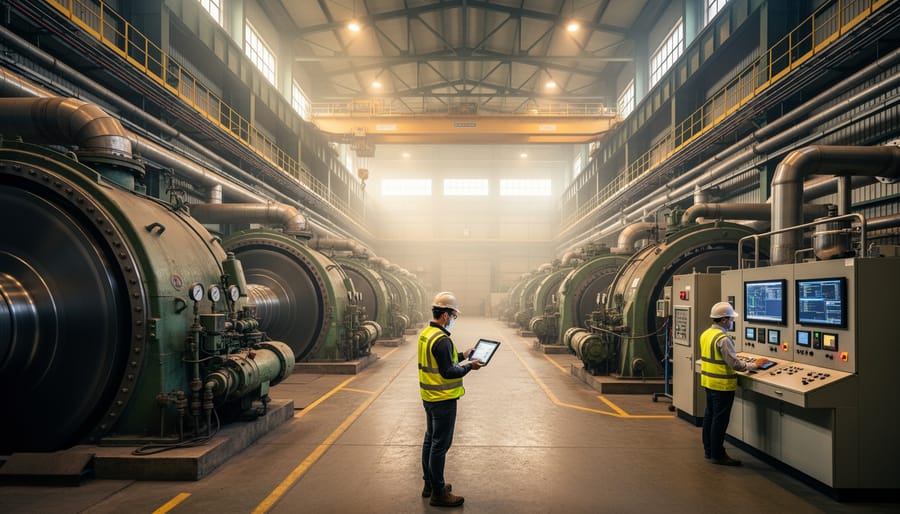
A shift usually starts with a handoff. The outgoing crew walks the incoming operators through what changed overnight, which equipment is running hot, and any open maintenance work. Then the real job begins: watching.
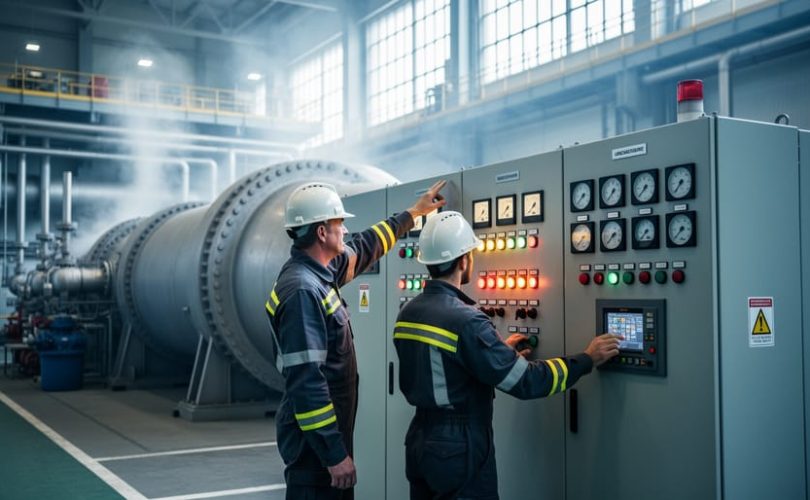
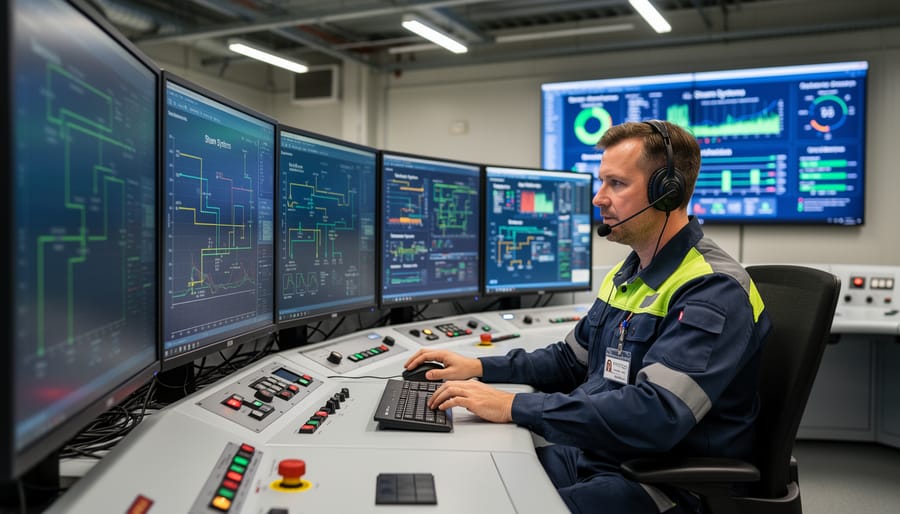
Most of the day is steady monitoring. Operators scan control screens and gauges for steam pressure, temperature, water levels, and turbine vibration, and they make small adjustments to keep everything inside safe limits. Every so often they walk the plant floor to listen, look, and check equipment that sensors can’t fully capture. Readings get logged, either on paper or in a computer system, because trends often reveal problems before an alarm does.
When an alarm sounds, the crew follows set procedures: confirm the cause, stabilize the system, and call in help if needed. Calm and consistency matter more than speed.
The grid sets the pace, too. A dispatcher may call to raise or lower output as demand shifts, and operators adjust steam flow to match. The same is true at plants running on geothermal energy where steam comes from underground instead of a boiler.
Because electricity is needed every hour of every day, plants never close. Crews work rotating shifts, including nights, weekends, and holidays.
How Operators Get Certified: Licensing, Qualification, and Credentials
State and Local Stationary Engineer and Boiler Licenses
In places that license operators, the system is usually built in tiers. Licenses are commonly sorted into classes or grades, and the grade you hold determines what you’re allowed to run. The two big factors are boiler pressure and plant capacity. A low-pressure heating boiler in a small building sits at the entry level, while the high-pressure units that feed a utility turbine require the upper grades. Think of it like a driver’s license that steps up from a car to a heavy truck: more power and more risk mean more proof of skill.
Getting a license typically involves two things. First comes a written exam covering steam basics, combustion, water treatment, safety devices, and the rules that apply to your jurisdiction. Second comes documented hands-on experience. Applicants log hours working under a licensed operator, and those hours often have to be verified by a supervisor or employer. Moving up a grade usually means more logged time plus another exam, so the process rewards steady, real-world experience rather than classroom learning alone.
Not every jurisdiction handles this the same way. Some require a license to operate high-pressure boilers, which covers most utility-scale equipment. Others lean on employer standards and internal qualification instead, leaving the plant to decide who is ready to run its systems. Because of this patchwork, it’s smart to check with your local or state licensing authority before assuming what applies to you. Requirements differ and change, so a quick call to the source beats relying on a general summary.
Nuclear and Specialized Plant Qualifications
Nuclear plants play by a different rulebook. Instead of relying on state or local boiler licenses, nuclear reactor operators go through a federally regulated path overseen by the Nuclear Regulatory Commission (NRC). Candidates typically complete an extensive, plant-specific training program before they can even sit for the licensing exam. That training combines classroom study, on-the-job learning, and a lot of time on a full-scope simulator, a replica of the control room where operators practice normal operations and emergencies without any real-world risk.
The NRC exams cover both written knowledge and hands-on operating performance, and licensed operators must keep their skills current through ongoing training and requalification. It’s a demanding, closely supervised process, which makes sense given what’s at stake.
Other specialized plants, such as geothermal or biomass facilities, usually don’t have a single federal pathway. Instead, the plant owner often designs its own qualification program, sometimes layered on top of whatever state boiler or stationary engineer license applies. That might include equipment-specific training, written tests, and supervised sign-offs before someone runs a unit solo. Because requirements vary by plant and location, it’s worth checking directly with the operator or your local licensing authority for current details.
Industry and Employer Credentials
Beyond government licensing, many operators pursue voluntary credentials that show they’ve mastered the fundamentals. Professional organizations and trade associations offer stationary engineer and power plant operator certifications, usually built around written exams covering boiler operation, steam systems, safety, and water treatment. These aren’t legally required in most places, but they can strengthen a résumé and help operators move between employers or states.
It helps to separate plant-floor operators from grid operators, because the two are easy to confuse. NERC system operator certification, administered by the North American Electric Reliability Corporation, applies to people who work in grid control rooms, such as reliability coordinators and balancing authority operators. Their job is keeping supply and demand in balance across the transmission network, not running a boiler or turbine. Someone could hold a stationary engineer license and never need a NERC credential, and the reverse is also true.
In practice, the document that matters most day to day is often the employer’s own. Utilities typically use qualification cards or task sign-offs: a trainee works through a checklist of equipment and procedures, and a qualified operator or supervisor signs off on each one. That sign-off is usually what actually authorizes someone to run a specific boiler, turbine, or auxiliary system, even when a state license is also in place.
The Typical Path From Trainee to Licensed Operator
Most operators don’t start in the control room. They start on the plant floor, and the path up is more like climbing a ladder than passing a single test.
The usual entry point is a high school diploma or equivalent, ideally with some math and science behind it. From there, people tend to come in through a few common doors.
Apprenticeships are one of the most direct routes. They pair paid, on-the-job work with classroom instruction, so you learn the equipment while a seasoned operator shows you how it behaves in real conditions.
Community college and technical programs in power plant technology or process operations are another popular option. These cover boiler and turbine fundamentals, water chemistry, instrumentation, and safety, and they can give you a head start when applying for trainee roles.
Military experience also carries real weight. Navy engineering ratings, for example, involve running steam propulsion systems, which translates well to utility boilers and turbines. Many plants actively welcome veterans for that reason.
Whichever door you use, the first job is often as an auxiliary or equipment operator. You’ll walk the plant, take readings, assist with startups, and learn the rhythm of the place. Employers usually fill in the gaps with their own training, which is why on-the-job learning matters so much.
Advancement follows a fairly predictable pattern. You log documented hours of experience, pass the licensing or qualification exams that apply in your area, and earn sign-offs from your employer for each piece of equipment or control position. Each step opens up greater responsibility, from helping out on the floor to running a boiler or turbine unit to eventually working the control room.
Timelines vary by plant, role, and local rules, so check with your licensing authority or a prospective employer for what applies where you live.
Why Operator Certification Matters to Everyday Electricity Users
Certified operators matter to you even if you never set foot in a power plant. High-pressure steam is genuinely dangerous, and licensing and qualification exist so the person watching those gauges knows what to do when something drifts out of range. That discipline keeps plant crews safe and keeps the lights on for the rest of us.
Reliability is the second piece. When solar and wind output dips, conventional and steam-based plants ramp up to fill the gap, and trained operators make those changes smoothly, following the grid dispatcher’s signals. The more renewables we add, the more that balancing act matters.
From our own experience testing home solar and battery setups, the biggest lesson was how much a “solar home” still leans on the grid. Our batteries covered some evenings and cloudy stretches, but longer low-sun periods meant relying on grid power, and it was reassuring to see that supply stay steady. It’s why we explain solar power at night the way we do: panels go quiet after sunset, and something else has to carry the load. If you’re weighing a grid-connected PV system, you’re effectively partnering with those plant crews every time you draw power after dark.
Understanding the people behind the grid helps you plan smarter, whether that means sizing a battery or simply appreciating what’s behind your outlet.
Common Questions About Power Plant Operator Certification
Most readers arrive with a handful of practical questions, so here are the ones that come up most often, answered plainly.
Do you need a college degree to operate a utility boiler?
Usually not. Most entry paths ask for a high school diploma or equivalent, plus technical coursework, an apprenticeship, or on-the-job training. A degree can help with advancement, but it’s rarely the gate.
Is a license required in every state?
No. Requirements vary by state, city, and plant type, and some places lean on employer qualification rather than government licensing. Check with your local licensing authority or the plant operator for current rules.
How long does it take to become a licensed operator?
It depends on the license class and how quickly you log the required hands-on experience. Expect a multi-year journey from trainee to fully qualified, since exams, documented hours, and employer sign-offs all come into play.
Are plant operators different from grid operators?
Yes. Plant operators run the boilers, turbines, and related equipment on site, while grid operators manage the flow of electricity across the wider network. Grid-control roles often carry their own credential, such as NERC system operator certification.
Will renewables replace these jobs?
Not overnight, and probably not entirely. Solar and wind are growing, but steam-based plants still provide steady, dispatchable power, and many of the same skills carry over to geothermal, biomass, and newer facilities.
If you’re curious how all this connects to your own bills, it helps to know that the power you buy from your energy suppliers often passes through plants run by exactly these certified professionals. Knowing who’s behind the controls makes the whole system feel a little less abstract.
One last tip: rules change, and they differ from place to place. Before you plan a career move or simply satisfy your curiosity, confirm the details with your state or local licensing board, since they’re the final word on what’s currently required.
Key Takeaways and Where to Learn More
If you want current requirements, check with your state or local licensing board, the utility or plant operator, and accredited training programs, since rules change and differ by location. It’s worth knowing who’s behind the switch. The people in those control rooms keep your lights on, including on cloudy days when your panels can’t. Understanding their work makes you a sharper, more informed energy consumer.