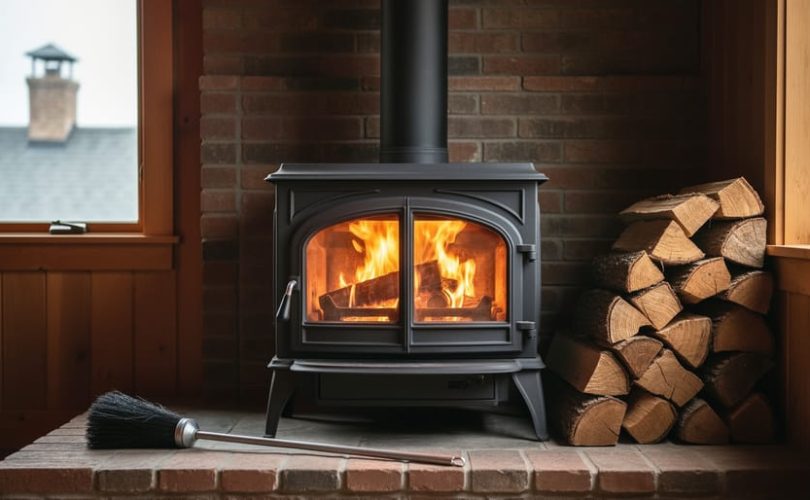
Inspect your chimney for creosote buildup every month during heating season—this tarry substance restricts airflow and reduces efficiency by up to 30%, while creating serious fire hazards. When creosote layers exceed one-eighth inch thickness, schedule a professional cleaning immediately to restore optimal draft and heat output.
Burn only seasoned hardwood with moisture content below 20% to maximize heat production and minimize smoke. Wet or green wood generates excessive creosote, produces half the heat energy, and forces your stove to work harder while wasting fuel. Test wood moisture using an inexpensive meter before burning—properly dried wood should read between 15-20%.
Adjust your damper settings to maintain active, bright flames rather than smoldering fires. Insufficient air creates incomplete combustion, sending unburned fuel up the chimney and coating it with efficiency-robbing deposits. This simple adjustment can improve heat output by 15-25% while extending the time between cleanings.
Verify your chimney height meets the 3-2-10 rule: at least 3 feet above the roof penetration and 2 feet higher than anything within 10 feet. Insufficient height creates weak draft that pulls heat and money straight outside. Most homeowners overlook this fundamental factor when optimizing your energy choices, yet proper chimney design directly impacts fuel consumption and heating costs. Professional assessment through services like chimney repair St Pete can identify structural issues preventing peak performance.
Understanding Wood Stove Chimney Efficiency: The Foundation of Sustainable Heating
Wood stove chimney efficiency determines how effectively your heating system converts fuel into usable warmth while safely venting combustion byproducts. In practical terms, an efficient chimney creates optimal draft conditions that allow your wood stove to burn cleanly and completely, extracting maximum heat from every log you burn. When your chimney operates efficiently, you’ll notice shorter heating times, reduced fuel consumption, and lower heating costs throughout the season.
The impact on your energy consumption and wallet can be substantial. Homeowners with properly optimized chimneys report burning 20-30% less wood compared to systems with poor draft or ventilation issues. One of our customers, Margaret from Vermont, shared that after addressing her chimney efficiency problems, she reduced her annual firewood needs from six cords to just four, saving approximately $400 each heating season while maintaining the same comfort level in her home.
Understanding the key terminology helps you identify and address efficiency issues:
- Draft
- The upward flow of air and combustion gases through your chimney, created by temperature differences between inside and outside air. Strong, consistent draft ensures complete combustion and prevents smoke from entering your living space.
- Flue Temperature
- The heat level inside your chimney pipe, which should remain between 250-500°F during operation for optimal efficiency and safety. Temperatures below this range increase creosote buildup, while excessive heat wastes energy.
- Thermal Efficiency
- The percentage of heat energy from burning wood that actually warms your home rather than escaping up the chimney. Well-designed systems achieve 70-80% thermal efficiency.
- Creosote
- A flammable tar-like substance that accumulates on chimney walls when wood burns incompletely at low temperatures. This buildup reduces efficiency and creates serious fire hazards.
From an environmental perspective, efficient chimneys significantly reduce particulate emissions and carbon output. Poor efficiency means incomplete combustion, releasing more smoke and pollutants into the atmosphere while wasting the renewable energy potential of your wood fuel. By optimizing your system, you’re not just saving money—you’re minimizing your environmental footprint and supporting truly sustainable home heating.
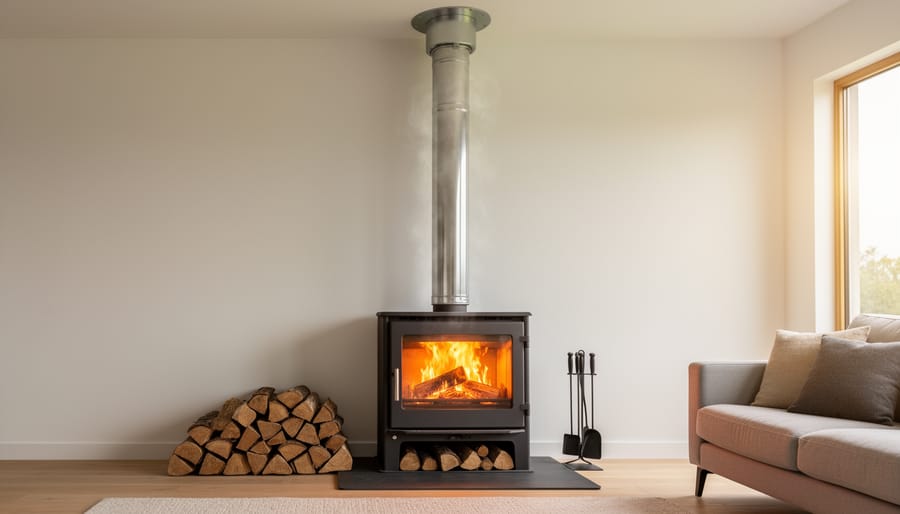
The Three Critical Factors That Determine Your Chimney’s Performance
Draft: The Invisible Force Behind Efficient Burning
Understanding draft is essential to maximizing your wood stove’s efficiency. Draft is the natural upward movement of air through your chimney, created when hot combustion gases rise and pull fresh air into the firebox. This continuous airflow cycle is what makes clean, efficient burning possible.
When your chimney has strong draft, it delivers oxygen-rich air to the fire while quickly removing smoke and combustion byproducts. This creates the high-temperature environment necessary for complete fuel combustion, meaning you extract maximum heat from every log while producing minimal creosote and pollutants.
Several factors influence draft strength in your system. Chimney height plays a crucial role—taller chimneys generally create stronger draft because the column of rising hot air has more vertical space to develop momentum. The temperature difference between your firebox and outdoor air also matters significantly. Cold winter days actually improve draft performance, while mild weather can weaken it. Your chimney’s diameter, interior smoothness, and overall condition all contribute to how efficiently gases flow upward.
Other indicators of poor draft include excessive creosote buildup, struggling flames that appear lazy or yellow rather than bright and active, and your fire going out unexpectedly. One homeowner shared with us that addressing their draft issues by adding chimney height reduced their wood consumption by nearly 20 percent while dramatically improving heat output. These real-world results demonstrate why understanding and optimizing draft should be your first priority when improving wood stove efficiency.
Chimney Height and Design Specifications
The height and design of your chimney directly impacts draft strength and overall efficiency. A properly designed chimney should extend at least 15 feet from the stove’s flue collar to create adequate draft, with taller chimneys generally performing better in most conditions. The “10-3-2 rule” serves as an essential guideline: your chimney must extend at least 3 feet above the roof penetration and 2 feet higher than any roof surface within 10 feet.
Stove placement significantly affects performance. Interior chimneys maintain warmer flue temperatures throughout their length, creating stronger draft compared to exterior installations where cold outdoor air cools the chimney. One homeowner reported a 20% improvement in heating efficiency simply by relocating their stove to utilize an interior chimney instead of an exterior wall installation.
Common design mistakes include undersized chimney diameter (which should match your stove’s flue outlet), excessive horizontal runs that restrict airflow, and too many bends that disrupt draft. Following minimum clearance requirements ensures safety while optimizing performance. If your chimney is shorter than recommended or has multiple elbows, you’re likely experiencing reduced efficiency and incomplete combustion, leading to higher fuel consumption and creosote buildup.
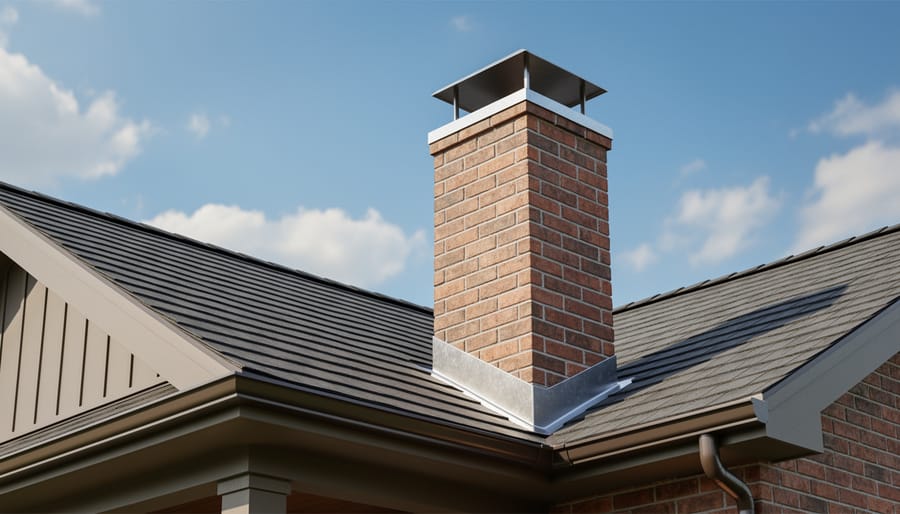
Insulation: Keeping Heat Where It Belongs
Proper insulation plays a critical role in maintaining chimney efficiency by keeping heat inside the flue where it belongs. An insulated chimney liner creates a protective barrier that maintains higher flue gas temperatures throughout the length of your chimney, which directly translates to stronger draft and better combustion.
When heat escapes through uninsulated chimney walls, the cooling gases slow down and lose their upward momentum. This temperature drop encourages creosote formation and can even cause smoke to backdraft into your living space. Insulated liners prevent this heat loss, ensuring gases stay hot enough to rise quickly and completely exit your home.
Homeowner Michael Stevens from Vermont shared his experience: “After installing an insulated liner in my 30-foot exterior chimney, I noticed an immediate improvement in draft strength. My stove draws consistently now, even on mild days when I previously struggled with smoke spillage.”
The benefits extend beyond draft improvement. Insulated chimneys reach operating temperature faster, reducing the startup period when incomplete combustion produces the most emissions. For exterior chimneys especially, insulation prevents the freeze-thaw cycle that damages masonry and protects your investment for decades to come.
Common Efficiency Killers in Wood Stove Chimneys
Understanding what hampers your chimney’s performance is the first step toward reclaiming lost heat and reducing fuel consumption. Through years of working with homeowners, we’ve identified several recurring issues that significantly impact wood stove chimney efficiency.
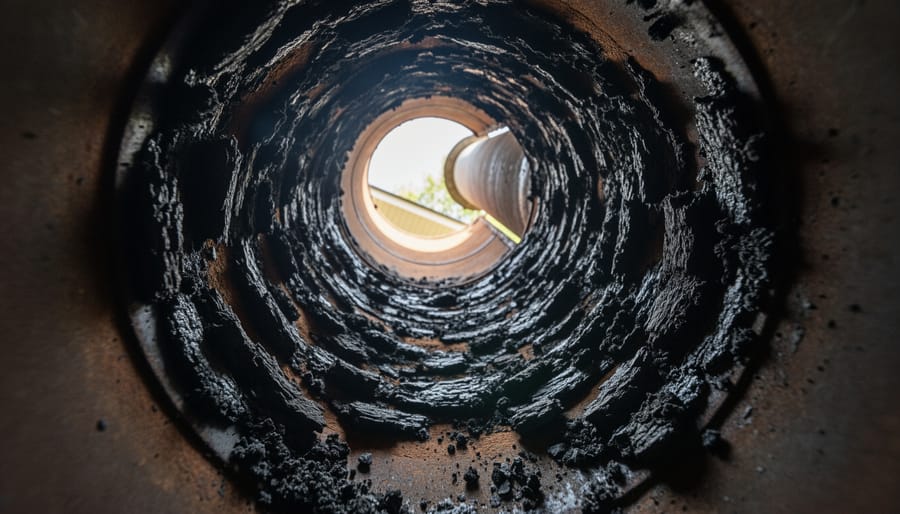
Creosote buildup ranks as the single most common efficiency killer. This tar-like substance forms when wood smoke condenses on cooler chimney walls, creating an insulating layer that restricts airflow and heat transfer. One homeowner from Vermont shared with us that after neglecting chimney cleaning for two seasons, their heating costs increased by nearly 30 percent. A professional inspection revealed over half an inch of creosote coating the flue, essentially choking their system. Regular cleaning not only restored efficiency but also eliminated a serious fire hazard.
Inadequate chimney height presents another widespread problem. A chimney that’s too short fails to create sufficient draft, resulting in incomplete combustion and smoke spillage into your home. The general rule requires your chimney to extend at least three feet above the roof penetration point and two feet higher than any roof surface within ten feet. We’ve encountered situations where homeowners wondered why their stove smoldered rather than burned cleanly, only to discover their chimney fell short of these specifications by just eighteen inches.
Incorrect sizing creates ongoing efficiency challenges that many people overlook during installation. A chimney that’s too large for your stove allows excessive heat to escape before warming your home, while an undersized flue restricts airflow and causes poor combustion. Match your chimney diameter to your stove’s outlet specifications for optimal performance.
Air leaks throughout the chimney system waste significant amounts of heat. Deteriorating mortar joints, damaged chimney caps, and poorly sealed connections allow cold air infiltration that cools flue gases prematurely. This cooling effect reduces draft strength and promotes creosote formation, creating a cascading efficiency problem.
Burning unseasoned or wet wood compounds all these issues. Wood with moisture content above 20 percent produces cooler, smokier fires that accelerate creosote buildup and reduce heat output. A customer from Oregon reported burning through 40 percent more wood until switching to properly seasoned fuel, which transformed their heating experience overnight.
External factors also play roles in efficiency loss. Nearby trees or buildings can disrupt airflow patterns, creating downdrafts that interfere with proper venting. Additionally, damaged or missing chimney caps allow rain, debris, and animals to enter, obstructing the flue and reducing performance. Addressing these common problems systematically can restore your wood stove system to peak efficiency.
Proven Strategies to Maximize Your Wood Stove Chimney Efficiency
Installation Best Practices for Long-Term Efficiency
Getting your chimney installation right from the start makes all the difference in long-term efficiency. The foundation begins with proper sizing—your chimney should match your stove’s flue collar diameter and provide adequate draft. A chimney that’s too large creates sluggish airflow and creosote buildup, while one that’s too small restricts exhaust and reduces heating capacity.
Stainless steel liners are the gold standard for wood stove installations. Unlike clay tiles that can crack under thermal stress, quality stainless steel withstands temperature fluctuations and provides a smooth interior surface that promotes efficient draft. Look for liners rated for solid fuel burning with appropriate insulation to maintain optimal flue temperatures.
Height matters significantly for performance. Your chimney should extend at least three feet above the roof penetration point and two feet higher than any roof surface within ten feet. This “3-2-10 rule” ensures proper draft even in challenging weather conditions.
One homeowner shared how switching to an insulated liner improved their draw so noticeably that fuel consumption dropped by nearly twenty percent within the first season. Professional installation ensures proper clearances from combustible materials, weatherproof sealing, and compliance with local building codes—investments that pay dividends through decades of reliable, efficient operation.
Maintenance Routines That Preserve Peak Performance
Consistent maintenance separates efficient wood stove chimneys from underperforming ones. Following a structured cleaning and inspection schedule ensures your system operates safely while maximizing heat output and fuel efficiency.
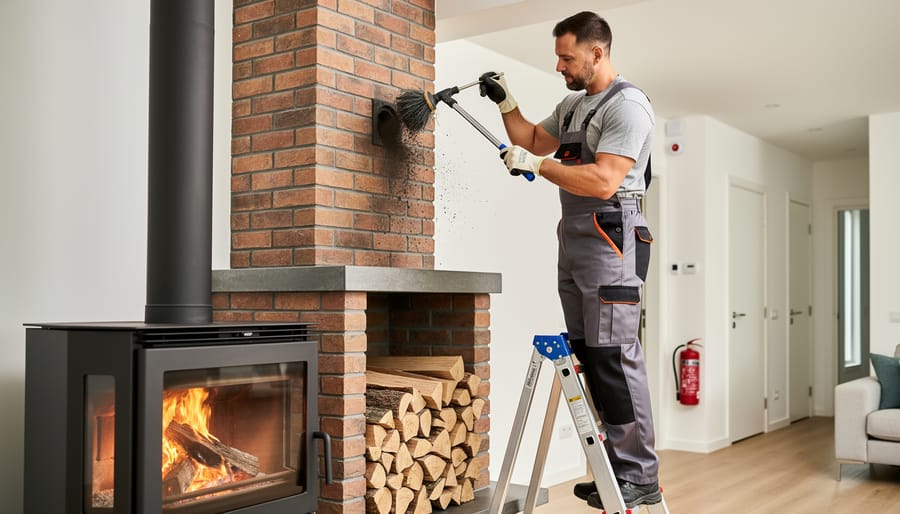
Clean your chimney at least once annually, preferably before heating season begins in early fall. However, if you burn more than three cords of wood per season, schedule cleanings twice yearly—once mid-season in January and again before the next heating cycle. Professional chimney sweeps remove creosote buildup that reduces draft efficiency and creates fire hazards. One homeowner from Vermont shared, “After switching to bi-annual cleanings, I noticed my stove burned hotter with less wood, cutting my winter fuel costs by nearly 20 percent.”
Conduct monthly visual inspections during active burning months. Check for excessive soot on glass doors, which indicates incomplete combustion. Examine visible chimney sections for cracks or deterioration, and verify that the cap remains secure and undamaged.
Spring represents the ideal time for comprehensive professional inspections. Technicians assess structural integrity, measure creosote deposits, and identify necessary repairs before summer. This timing allows sufficient lead time for maintenance work without disrupting your heating capability.
Between professional services, maintain peak performance through simple weekly tasks. Remove ash regularly once it accumulates to two inches depth, as excessive ash restricts airflow. Clean door gaskets monthly with a damp cloth, replacing them when they no longer seal tightly. These preventive measures, combined with burning properly seasoned wood, ensure your chimney operates at maximum efficiency throughout every heating season.
Upgrade Options Worth the Investment
Strategic upgrades can dramatically improve your wood stove chimney’s efficiency while paying for themselves through reduced fuel consumption and enhanced safety. Based on real-world installations and homeowner feedback, certain improvements consistently deliver measurable returns.
| Upgrade | Cost Range | Efficiency Gain | Payback Period |
|---|---|---|---|
| Chimney Cap | $150-$400 | 5-10% | 2-3 years |
| Top-Sealing Damper | $200-$600 | 10-15% | 3-5 years |
| Insulated Liner | $1,500-$3,500 | 15-25% | 5-8 years |
| Air Supply Kit | $300-$800 | 8-12% | 3-4 years |
Chimney caps prevent downdrafts and keep out moisture and debris while costing less than a cord of firewood in most regions. One Massachusetts homeowner reported eliminating cold-air backdrafts completely after installation, noting the cap paid for itself in a single winter through improved heat retention.
Top-sealing dampers create an airtight seal at the chimney crown, preventing heat loss when your stove isn’t operating. Unlike traditional throat dampers that wear out and leak, these upgrades maintain their seal for decades. They’re particularly valuable if your existing damper shows gaps or warping.
Insulated chimney liners represent the most significant investment but deliver the greatest efficiency improvements. They maintain higher flue temperatures, reducing creosote accumulation while improving draft consistency. Professional installation typically takes one day, and the improved combustion often reduces wood consumption by nearly one-quarter. For older chimneys with oversized flues, this upgrade transforms performance completely, creating the proper draft velocity that modern EPA-certified stoves require.
Measuring and Monitoring Your Chimney’s Efficiency
Understanding your chimney’s current performance is essential before making any improvements. Fortunately, you don’t need expensive equipment to get a good baseline assessment of how efficiently your system is operating.
Start with a visual inspection of your smoke. Ideally, smoke exiting your chimney should be nearly invisible or appear as a light, transparent haze. Thick, dark, or billowing smoke indicates incomplete combustion, meaning you’re wasting fuel and creating excessive creosote buildup. I’ve found that checking smoke color during different burning stages provides valuable insights into overall efficiency.
Next, examine the interior of your stove’s glass door. If it stays relatively clean during normal operation, your combustion is likely efficient. Heavy blackening after just one or two fires suggests poor airflow or wet wood. One homeowner shared with me that after addressing her draft issues, she went from cleaning the glass daily to weekly, a clear sign of improved efficiency.
Temperature monitoring offers concrete data about performance. A magnetic stove thermometer, available for under thirty dollars, measures surface temperature and helps you maintain the optimal burning range of 300 to 500 degrees Fahrenheit. Operating below this range increases creosote formation, while excessive heat wastes energy up the chimney.
Check your chimney cap regularly for creosote accumulation. Light, flaky deposits are normal, but thick, tar-like buildup indicates serious efficiency problems requiring immediate attention.
Finally, monitor your wood consumption. Keeping a simple log of how much wood you burn weekly during similar weather conditions establishes a baseline. After implementing efficiency improvements, you should notice measurable reductions in fuel usage, translating directly to cost savings and environmental benefits.
The Environmental and Economic Impact of Efficient Wood Stove Heating
Optimizing your wood stove chimney efficiency delivers benefits that extend far beyond your immediate comfort. When your chimney operates at peak performance, you’re directly contributing to environmental sustainability while significantly reducing your heating costs.
An efficient chimney system ensures complete combustion, which dramatically reduces particulate emissions and carbon monoxide release into the atmosphere. Homeowners who maintain proper chimney efficiency typically reduce their wood consumption by 20-30% annually. This translates to fewer trees harvested for fuel and a smaller carbon footprint for your household.
“After implementing the efficiency improvements recommended by my chimney inspector, I noticed an immediate difference,” shares Margaret Thompson from Vermont. “I used nearly a full cord less wood last winter compared to previous years, and my home stayed warmer. The cost savings paid for the chimney maintenance within one season.”
The economic advantages compound over time. Beyond reduced fuel costs, efficient wood burning means less creosote buildup, which lowers maintenance expenses and reduces fire hazards. Property owners who maintain their chimney systems properly spend approximately 40% less on repairs over a ten-year period compared to those who neglect regular maintenance.
When you combine chimney efficiency improvements with other energy savings strategies, the impact multiplies. Many homeowners use wood stoves as their primary heating source while exploring alternative renewable heating solutions for supplemental needs. Some even integrate geothermal heating options for a comprehensive renewable energy approach.
The investment in chimney efficiency also increases property value. Homes with well-maintained, efficient wood heating systems appeal to environmentally conscious buyers seeking sustainable living options. Your commitment to efficiency today creates lasting financial and environmental returns while supporting the transition toward cleaner, renewable energy solutions.
When to Call a Professional vs. DIY Solutions
Understanding when to handle chimney maintenance yourself versus calling a professional can save you money while keeping your system safe and efficient. While some tasks are straightforward enough for confident homeowners, others require specialized equipment and expertise.
Regular maintenance tasks like removing ash, cleaning the stove glass, and monitoring burn patterns fall squarely in the DIY category. These weekly or monthly activities require minimal equipment and help you stay connected to your heating system’s performance. Similarly, simple inspections using a flashlight to check for visible creosote buildup or debris can alert you to potential issues before they become serious problems. Like other DIY renewable energy projects, these basic maintenance tasks empower homeowners to take control of their heating efficiency.
- DIY maintenance costs significantly less than professional services for routine tasks.
- You develop a better understanding of your system’s performance and potential issues.
- Professionals have specialized equipment like rotary brushes and inspection cameras.
- Licensed chimney sweeps carry insurance protecting you from liability during complex work.
- DIY chimney sweeping without proper tools may leave dangerous creosote deposits behind.
- You risk personal injury from ladder falls or exposure to hazardous materials.
- Professional services represent a significant upfront cost, typically ranging from £100-£250 annually.
- Scheduling professional appointments may cause delays during peak heating season.
However, comprehensive chimney sweeping, structural inspections, and repairs should always involve certified professionals. Homeowner Sarah Mitchell from Cornwall learned this lesson after attempting to sweep her own chimney: “I thought I’d done a thorough job, but the professional sweep I eventually called found significant creosote buildup I’d missed completely. Worth every penny for the peace of mind.”
Professional intervention becomes non-negotiable when dealing with chimney fires, structural damage, liner installation, or when creosote reaches dangerous third-degree glazed levels. Safety should always outweigh cost considerations in these scenarios.
Frequently Asked Questions About Wood Stove Chimney Efficiency
Understanding the common concerns about wood stove chimney efficiency helps you make informed decisions about maintaining and optimizing your heating system. Here are the most frequently asked questions from homeowners like you.
What’s the optimal burning temperature for maximum efficiency?
The sweet spot for most wood stoves is between 300-500 degrees Fahrenheit at the stovetop. This temperature range ensures complete combustion while preventing creosote buildup. I’ve found through years of monitoring my own system that maintaining consistent temperatures around 400 degrees delivers the best balance of heat output and fuel economy. Installing a magnetic stove thermometer costs under $20 and provides instant feedback to help you stay in this optimal zone.
How often should I clean my chimney?
For regular wood burners, annual cleaning is the minimum standard. However, if you use your stove as a primary heat source throughout winter, schedule inspections twice yearly. One homeowner from Vermont shared that switching from annual to semi-annual cleanings reduced her wood consumption by 15 percent because the improved airflow made her stove burn more efficiently. The frequency also depends on wood quality—burning seasoned hardwood produces less creosote than softwood or unseasoned logs.
Will my chimney efficiency decrease over time?
Yes, but proper maintenance slows this decline significantly. Creosote accumulation, deteriorating chimney liners, and worn gaskets gradually reduce performance. Most homeowners notice efficiency dropping by 10-20 percent over three to five years without intervention. Regular cleaning and replacing worn components restore performance to near-original levels.
Are modern EPA-certified stoves compatible with older chimneys?
Generally yes, but upgrades often improve results. EPA-certified stoves operate at higher efficiencies and lower temperatures than older models, which can actually increase creosote formation in oversized chimneys. A properly sized stainless steel liner typically solves compatibility issues. One customer reported that adding a liner to his 1970s chimney when installing a new EPA stove increased his overall system efficiency by 25 percent while dramatically reducing draft problems.
These practical insights help you maintain peak performance while maximizing your heating investment and environmental benefits.
Optimizing your wood stove chimney efficiency isn’t just about immediate comfort—it’s a cornerstone of sustainable home heating that reduces fuel consumption, lowers emissions, and saves money over the long term. By implementing the strategies we’ve covered, you can transform an underperforming system into an efficient, reliable heat source that aligns with your environmental values.
Take a moment to assess your current setup. When did you last inspect your chimney? Are you burning properly seasoned wood? Is your draft performing as it should? These simple questions can reveal opportunities for significant improvements. Homeowners who’ve addressed these fundamentals report burning 20-30% less wood while achieving better heat output—a win for both their wallets and the environment.
Remember that professional inspections and cleanings remain essential, but the daily choices you make about fuel quality, burning techniques, and system maintenance directly impact your results. Even small adjustments, like installing a chimney thermometer or upgrading to a modern catalytic stove, can yield measurable benefits.
At Sun Nature Power Solutions, we’re committed to empowering consumers with the knowledge and resources needed to make informed decisions about renewable energy solutions. Whether you’re troubleshooting an existing wood stove or exploring complementary heating options, understanding chimney efficiency principles helps you maximize your investment in sustainable home heating. Your journey toward greater efficiency starts with awareness—and now you have the tools to take action.